Beyond the Written Word: How The Battle Between Good and Evil Creates a Multilayered Reading Experience
Combining imagery, biblical scripture, chronological records, and symbolic patterns, the publication encourages readers to examine how different forms of information can shape a larger narrative.
Books have traditionally relied on words to communicate ideas, develop arguments, and tell stories. Yet some publications seek to move beyond conventional literary structures, introducing visual elements, historical references, and interactive forms of interpretation that require readers to participate more actively.
The Battle Between Good and Evil: Armageddon and the New World Order takes this approach through a substantial collection of messages, photographs, biblical references, dates, and symbolic details.
Its presentation reflects the authors’ belief that meaning can emerge from relationships between different forms of information. Instead of treating illustrations and references as supplementary material, the publication makes them central to the reading experience.
At the beginning of the manuscript, readers are introduced to a framework involving five dimensions of storytelling: pictures, words, dates, times, and important references.
This structure establishes the foundation for an unusually detailed presentation in which each component is intended to contribute to the broader message.
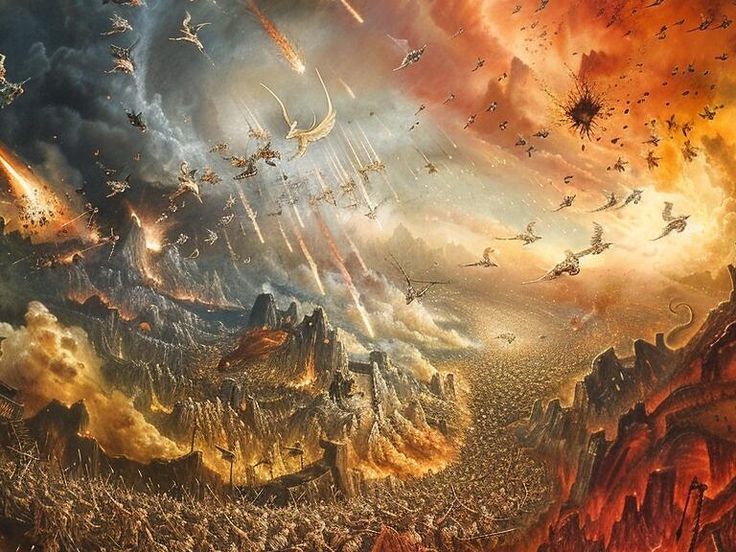
Photographs and visual symbols frequently accompany written passages. The imagery ranges from religious and historical subjects to objects and scenes that the authors associate with particular interpretations.
These visual elements invite readers to consider how images influence perception and how symbolism can communicate ideas that extend beyond literal descriptions.
Dates and times provide another layer of organization. Many messages are connected to specific chronological markers, creating a record of the authors’ developing narrative and interpretations.
The publication also emphasizes numerical patterns and references to gematria, a system of assigning numerical values to letters or words. Within the book, these interpretations form part of the authors’ symbolic framework. Their suggested connections are interpretive rather than scientifically demonstrated relationships.
Biblical scripture serves as another important component.
Passages addressing faith, justice, spiritual conflict, and the triumph of good over evil appear throughout the work. The authors draw on these religious references to connect their messages with themes found in longstanding spiritual traditions.
The resulting narrative explores subjects ranging from moral responsibility and personal faith to the authors’ views on global events, political institutions, and humanity’s spiritual future.
While some of the book’s historical and political claims are controversial and lack independent verification, its presentation provides an opportunity to examine how religious interpretation, contemporary commentary, and symbolic reasoning can be combined into a single narrative.
An important part of engaging with such material is the ability to distinguish documented events from speculation, personal belief, and symbolic interpretation.
This distinction becomes especially relevant in a publication that asks readers to conduct their own research.
The manuscript repeatedly emphasizes the importance of active participation. Its intended audience is encouraged to investigate the references, consider alternative interpretations, and approach the material as something to study rather than simply consume.
For readers interested in religious literature, symbolic storytelling, and unconventional documentary-style presentations, this structure offers an unusual perspective on the relationship between text and meaning.
Despite its extensive range of subjects, the publication returns frequently to a central moral theme: the hope that humanity can overcome division and move toward a future characterized by peace, love, and happiness.
The authors use the struggle between light and darkness as a recurring representation of this aspiration.
Within that framework, the battle between good and evil becomes more than a spiritual confrontation. It becomes a way of examining individual choices, collective responsibility, and the consequences of human behavior.
As anticipation builds around The Battle Between Good and Evil: Armageddon and the New World Order, the publication stands apart through the scale of its material and its unconventional approach to storytelling.
It does not ask readers merely to follow a sequence of events. It invites them to examine symbols, interpret references, and consider how different ideas connect.
In a world overflowing with information, the ability to question, investigate, and think critically may be one of the most valuable parts of the reading experience.
Discover the distinctive structure and spiritual themes of The Battle Between Good and Evil through its official website and forthcoming promotional content.

